Event 1
Kidnapping of Pepino Macchetti
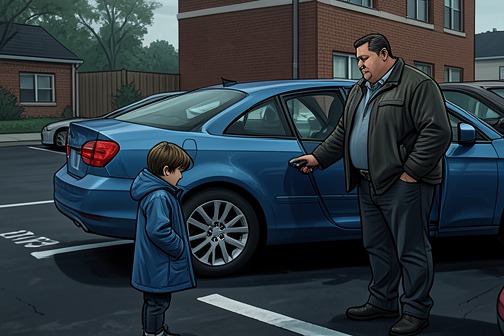
The [Kidnapping of Pepino Macchetti](entity:event-recall-event-kidnapping-of-pepino-ma-e228623f01d1) is the novel’s opening example of a child taken in the ordinary course of a school-day journey. In winter in [Milan](entity:location-recall-location-617379caf4c2), eight-year-old Pepino enters the blue Mercedes he expects to take him home; the driver is not the familiar Angelo, and a heavyset stranger soon gets into the car beside him. The abduction establishes the danger that will shape the Balletto family’s decisions about [Pinta](entity:character-recall-character-pinta-8e1a6ba323b3), while later revelations about ransom insurance and a separate kidnapping plot give the opening a darker economic context.
## The Abduction in Milan
The scene begins among expensive cars waiting outside a large building as children spill down the steps into the cold. Pepino, his head tucked into his raincoat collar, hurries to the corner where his father’s driver usually parks the blue Mercedes. The driver watches him in the mirror, leans back to open the door, and lets him into the car’s warmth. Pepino struggles out of his raincoat; only after the Mercedes has reached the next corner does he look up and realize the driver is not Angelo.
As Pepino is about to ask a question, the Mercedes pulls back to the curb and its door opens. A heavyset man gets in beside him. The driver waits for a gap in the homebound traffic and then pulls smoothly away. The scene does not describe a struggle or establish what happens to Pepino afterward; its force lies in how the familiar routine of the ride home has been turned against him. A trusted-looking car and the expected driver’s place in the routine give the boy no immediate reason to recognize the danger.
The narration places the abduction within a wider pattern: although it is only January, Pepino is already the third kidnapping victim in [Italy](entity:location-recall-location-italy-85c2492cd54b) that year. Later, [Rika](entity:character-recall-character-rika-f2d428d5e31b) refers to him as having been taken in broad daylight right outside his school. Her recollection makes the incident a concrete precedent in the family’s argument over Pinta’s exposure to danger, even as the opening scene focuses on the corner and the substituted driver rather than depicting the abduction at the school gates itself.
## A Warning in the Balletto Household
Rika invokes Pepino’s abduction while pressing [Ettore](entity:character-recall-character-ettore-4df63a1e4ff4) to find a safer arrangement for Pinta. She raises the fact that the boy was taken in daylight near his school as evidence that a child can be seized in a place and at a time that might otherwise seem routine. Ettore answers that the Macchettis are among Milan’s richest families, whereas the Balletto family is not rich and its financial difficulties are becoming known. His response turns the same example into an argument about whether Pinta is a plausible target: Rika sees the abduction as proof that children are at risk, while Ettore believes the difference in their families’ wealth reduces that risk.
The incident also gives [Creasy](entity:character-recall-character-creasy-ee39d45de449) a practical framework for the protection job. He thinks in military terms, treating Pinta as an asset that an opponent might try to capture at home, at another regular destination such as school, or on the road between them. When he inspects the school, he notes its high, spike-topped walls, heavy gates, and lack of cover outside, then studies the grounds and the building’s security. His assessment extends beyond the school itself: he identifies the journey as a likely point of vulnerability and considers varying the daily route. Pepino’s abduction thus changes the question from whether a location appears secure to how a predictable routine might be exploited.
## Ransom Insurance and the Price of Protection
The story’s discussion of Pepino’s abduction sits alongside an explanation of the financial arrangements surrounding kidnapping. [Vico Mansutti](entity:character-recall-character-vico-mansutti-35a27592bd5d) tells Ettore that the Italian government does not permit Italian insurers to write policies covering ransom, on the grounds that such coverage might encourage kidnapping. Foreign insurers can provide it; Lloyd’s of [London](entity:location-recall-location-1bfd335cdd1b) is presented as a major provider. The policies described require premiums to be paid outside Italy and the insured person never to disclose the coverage.
Security measures can reduce those premiums. Vico explains that a full-time bodyguard could lower the rate on a hypothetical one-billion-lire policy from five percent to three percent, a saving of twenty million lire against a bodyguard’s annual cost of thirty million. He then introduces the low-cost alternative: a “premium bodyguard” costs about seven million lire a year and, as Vico concedes, would do little to stop a kidnapping, but could still qualify the insured for a lower premium. That distinction between protection in name and protection in practice becomes relevant to Creasy’s hiring: Rika later learns he was employed for a pittance merely to appease her, and calls him a drunk unfit to protect her daughter.
## The Opening’s Later Reversal
Pepino’s abduction is not the kidnapping whose scheme is eventually exposed. Later, Creasy tells Rika that Pinta’s kidnapping was arranged as an insurance job: Ettore had taken out a two-billion-lire policy with Lloyd’s of London, and [Dino Fossella](entity:character-recall-character-dino-fossella-51c90a41d328) was to return half the ransom to him. Vico Mansutti had acted as intermediary and received a commission through his organized-crime connections. Rika’s fear, initially sharpened by the Macchetti case, is therefore set against a separate crime in which the apparent safeguards and the family’s own arrangements have been corrupted into part of the scheme.
That reversal gives the opening incident a lasting structural role without making Pepino’s fate part of Pinta’s story. The first abduction establishes the public danger that Rika fears and that Creasy approaches as a problem of routes, targets, and security. The later plot exposes how protection and insurance can be manipulated by people close to the family. The novel begins with a child’s ordinary ride home made unsafe from within; it later reveals that, in Pinta’s case, the danger was not only an outside threat but a fraud organized through the very arrangements meant to manage it.
Event 2
Kidnapping of Valerio Venucci

[Kidnapping of Valerio Venucci](entity:event-recall-event-kidnapping-of-valerio-v-706a7e3ce7ad) is a recent abduction that turns an argument about [Pinta Balletto](entity:character-recall-character-pinta-balletto-e7c88936c38e)’s safety from abstract fear into a concrete warning. The boy’s family was in financial difficulty, yet kidnappers held him for two months and demanded a ransom; after he was recovered, he had lost a finger and was described as having been mentally devastated ever since. The episode exposes the human cost hidden behind calculations about a family’s wealth and makes [Rika Balletto](entity:character-recall-character-rika-balletto-bd8caff1f70f)’s fear difficult for [Ettore Balletto](entity:character-recall-character-ettore-balletto-2a8f4bd883b5) to dismiss.
## Background and the Dispute About Risk
The kidnapping enters the novel through a domestic argument rather than a staged abduction scene. [Rika](entity:character-recall-character-rika-f2d428d5e31b) is pressing [Ettore](entity:character-recall-character-ettore-4df63a1e4ff4) to find a way to protect their daughter, [Pinta](entity:character-recall-character-pinta-8e1a6ba323b3). She points to the earlier abduction of a child outside his school in broad daylight, then challenges Ettore with the Venucci case when he argues that professional kidnappers would not waste time on a family whose father was nearly bankrupt. The detail that the Venuccis were in construction and had fallen on bad times directly counters his confidence that financial distress made Pinta an unlikely target.
Ettore does not deny that Valerio was kidnapped. Instead, he distinguishes that case from the danger he believes threatens Pinta: he says the Venucci kidnappers were outsiders from [Marseilles](entity:location-recall-location-marseilles-6a494401c351), unfamiliar with the family, and foolish. In his account, they were caught two weeks after receiving the ransom. His explanation offers Rika a reason to treat the case as exceptional, but it also confirms the very vulnerability she is arguing about: a child from a financially troubled family could still be taken and held for ransom.
## Captivity and Ransom
Valerio was eight years old when he was abducted, six months before the conversation. His captivity lasted two months. During that period the kidnappers lowered their demand from one billion lire to two hundred million, a sum the family eventually scraped together. The changing demand makes the ordeal a prolonged negotiation as well as a physical separation: the child remained in the kidnappers’ hands while his family struggled to meet a price that had already been sharply reduced.
The account establishes the ransom payment and the subsequent capture of the kidnappers, but supplies no detailed scene of the abduction, the place where Valerio was held, or the circumstances of his recovery. Those limits keep the episode focused on what the family’s fear and the boy’s injuries reveal, rather than on the mechanics of the crime. The two-week interval between payment and the kidnappers’ capture is reported as part of Ettore’s explanation of why he considers their operation inept; it does not erase the two months of captivity that preceded it.
## Injury and Aftermath
Rika’s reply shifts attention from the kidnappers’ competence to the child who bore the consequences. Valerio lost a finger, and she says he had been a mental case ever since. The lasting effects make the ransom’s payment an incomplete resolution: money ended the family’s immediate inability to secure his release, but it did not restore the boy to his former condition. The novel gives no further account of his later life, so the stated physical loss and continuing psychological damage are the episode’s definitive aftermath.
For Rika, these consequences answer Ettore’s effort to reassure her by describing the kidnappers as outsiders who made mistakes. Whether the perpetrators were sophisticated or careless, Valerio was still harmed. Her question about what might happen to Pinta makes the case a warning about the limits of treating kidnapping as a calculation of likely profit or the victim’s family wealth. The danger is not measured only by whether a ransom can be paid or the criminals eventually caught; it is also measured by what happens to the child during and after captivity.
## Narrative Significance
The Venucci case functions as a counterexample in the argument that precedes Pinta’s protection. Rika uses it to challenge Ettore’s claim that a nearly bankrupt family is not an attractive target, while Ettore tries to contain its significance by emphasizing the kidnappers’ foreign origin and incompetence. Their disagreement anticipates the novel’s broader attention to kidnapping as an organized crime that exploits a child’s exposure and a family’s fear. The case gives that threat a specific measure: two months held, a ransom reduced from one billion lire to two hundred million, and injuries that remain after the payment and the kidnappers’ eventual capture.
Event 3
Mafia power-sharing meetings of 1953–1954
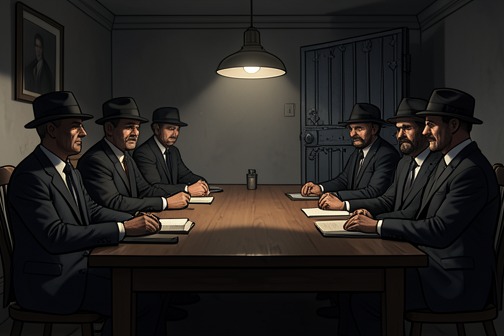
The [Mafia power-sharing meetings of 1953–1954](entity:event-recall-event-mafia-power-sharing-mee-87934809ee29) were a secret negotiation over territory, hierarchy, and arbitration among [Italy](entity:location-recall-location-italy-85c2492cd54b)’s regional criminal bosses. Their decisive result was the appointment of [Don Cantarella](entity:character-recall-character-don-cantarella-e989c22e8294) of [Palermo](entity:location-recall-location-palermo-b16a2f0e892c) as interim arbitrator: a compromise that turned Palermo’s initiative into a lasting political advantage and preceded a long period of relative peace and profit for those involved.
## Background and Purpose
The meetings took place against the postwar return of organized crime. Under Fascist and German rule, criminals had lost power as many were shot or imprisoned; the arrival of the Americans released criminals alongside innocents, and crime returned with the justice system. This account presents the two as returning hand in hand, suggesting that the restoration of democratic justice also created room for criminal influence to recover.
[Floriano Conti](entity:character-recall-character-floriano-conti-0d134be68819), in his mid-thirties, exemplified a new kind of boss. He had established his territory through violence, but now adopted the posture of a practical businessman. He understood that exploiting his power fully required arrangements with other bosses operating across the country. Cooperation, rather than continued uncoordinated competition, became the stated purpose of the meetings he accepted after emissaries arrived from Palermo.
## Negotiation and Regional Rivalries
Held in great secrecy during 1953 and 1954, the meetings resembled a papal election: participants maneuvered over position, while the eventual settlement was announced without public ceremony. The comparison captures both the private nature of the negotiations and their concern with choosing an authority acceptable to competing factions. The gathering was not simply a division of territory; it also had to establish a pecking order and identify someone with enough influence to arbitrate disputes.
The regional balance was difficult to settle. Traditionalist bosses from [Calabria](entity:location-recall-location-81e24fab0da3) resisted allowing the more sophisticated bosses of [Milan](entity:location-recall-location-617379caf4c2) and Turin too much power. Leaders from central Italy, including [Rome](entity:location-recall-location-rome-3ec0a741c1f4) and [Naples](entity:location-recall-location-naples-13ce8e2c4961), wanted greater influence than they had enjoyed before the war. The northern bosses would not accept the Calabrians, and the Calabrians would not accept them in return. Moretti of Rome was regarded as too weak to arbitrate, while [Conti](entity:character-recall-character-conti-9c96f0538af3) was considered too young. The deadlock exposed the limits of each faction’s claim: the leading contenders could not secure acceptance from the others.
## The Compromise and [Cantarella](entity:character-recall-character-cantarella-af667dcc0c29)’s Position
The compromise emerged from the meetings’ Palermo organizers. Don Cantarella, the boss there, was small, dapper, and diplomatic, and he quietly aimed to restore Palermo as the fountainhead of criminal power. He read the balance of forces correctly: with the rival regional blocs unwilling to accept one another’s preferred candidates, a figure who had convened the negotiations could present himself as a workable intermediary.
The settlement installed Don Cantarella as interim arbitrator. The designation was a compromise rather than an explicit declaration that all regional rivalries had disappeared. Its significance lay in granting him a central role in the structure the bosses had agreed was necessary. The participants did not fully recognize the extent of his political skill or the advantage this arrangement gave him. The account makes the asymmetry plain: they treated his appointment as a solution to an immediate impasse, while he used the position to strengthen Palermo’s standing.
## Aftermath and Significance
The settlement set the stage for a long period of relative peace and great profit for the bosses. Peace here does not mean the disappearance of organized crime or the resolution of the factions’ competing interests. It describes an order in which those interests could coexist under a negotiated structure, with an arbitrator capable of managing the balance. The meetings therefore mark a shift from the establishment of territories by violence toward coordination among established powers.
Their longer consequence was Don Cantarella’s sustained influence. The bosses present did not understand that their interim choice would support and strengthen his position over the following twenty years. The episode’s irony lies in the difference between the immediate purpose of compromise and its enduring beneficiary: a gathering meant to contain rivalry gave the Palermo boss the authority to shape the order that followed.
Event 4
Battle of Dien Bien Phu
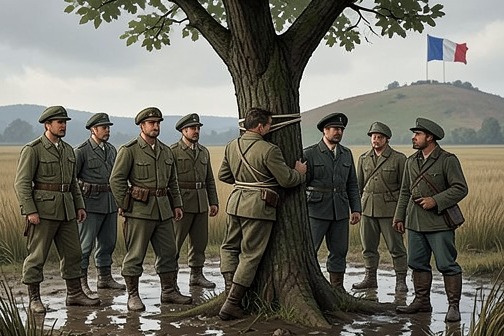
The [Battle of Dien Bien Phu](entity:event-recall-event-battle-of-dien-bien-phu-3c5910ff0a92) is presented through both its cost to the [French Foreign Legion](entity:organization-recall-organization-3a78bd1be731) and [Creasy](entity:character-recall-character-creasy-ee39d45de449)’s personal memory of defeat and captivity. The battle’s significance extends beyond the battlefield: it helps explain the Legion’s postwar condition and resurfaces in a quiet conversation with [Pinta](entity:character-recall-character-pinta-8e1a6ba323b3), when Creasy finally describes the scars on his hands.
## Background and Cost
The Legion was reconstituting itself after the shambles of [Vietnam](entity:location-recall-location-11e77564f811) and the Battle of Dien Bien Phu. Several thousand Legionnaires had been captured there, and more than fifteen hundred had been killed. The account places the battle within the Legion’s history of last-resort deployments and futile battles, making its losses part of a wider pattern rather than an isolated setback.
That defeat also forms the background to the Legion Creasy later serves in. The force is described as rebuilding with modern equipment and techniques, while its own institutional identity supplies a purpose beyond the national loyalties its members have left behind. The battle is therefore both a military catastrophe and a defining rupture in the Legion’s recent history.
## Creasy’s Capture and Survival
Creasy was captured at [Dien Bien Phu](entity:location-recall-location-35f9c2e7889a). After nine months in a Viet Minh prisoner-of-war camp, he returned to active service and became the sergeant of B Company in the [1st R.E.P.](entity:organization-recall-organization-2bff0614a64e) His later position as a decorated veteran thus begins in the defeat the Legion is still recovering from.
In his recollection, surrender is followed by humiliation and a forced march of three weeks to a prisoner-of-war camp. The march reduces survival to the repeated effort of dragging one foot after the other: food is scarce, men die, and guards shoot those who fall and cannot get up. Creasy remains standing. He also carries a young wounded officer on his back, an act of endurance and aid within a journey defined by exhaustion and death.
## Interrogation and the Mark on His Hands
Survival does not end Creasy’s ordeal. At the camp, a Vietnamese captain questions him across a wooden table. Creasy refuses to answer, signalling his refusal with a shake of the head. The captain smokes Gauloise cigarettes and repeatedly extinguishes them on the backs of Creasy’s strapped-down hands, leaving the mottled scars that remain visible years later.
The memory returns after Pinta touches one of those hands and asks what happened. Creasy does not jerk away as he once would have. Instead, he looks down at the scars and recalls the interrogation, then gives Pinta a restrained account of the smoker and the absent ashtray. The battle’s consequences emerge in that small exchange not as a general report of defeat, but as an injury carried on his body.
## The Recalled Event and Its Aftermath
The battle is narrated through Creasy’s memory, prompted by Pinta’s question in the present. His account moves from capture to forced march, camp, and interrogation, linking the military defeat to the intimate physical evidence it left behind. Pinta understands what his brief explanation implies; tears fill her eyes, and she remains silent. The scene makes the act of telling consequential: Creasy allows another person to witness an experience he had kept behind the visible scars.
Event 5
FLN ambush near Palestro
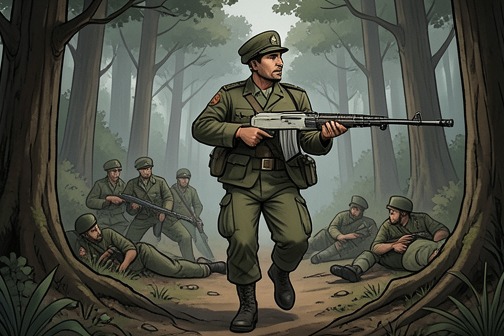
The [FLN ambush near Palestro](entity:event-recall-event-fln-ambush-near-palestr-eb46b8f52f20) was the first combat action Guido experienced as a Legionnaire and the occasion when [Creasy](entity:character-recall-character-creasy-ee39d45de449) first approached him beyond issuing orders. The pursuit ended in the destruction of the [Algerian National Liberation Front](entity:organization-recall-organization-5af8f528ac41) unit; afterward, a small gesture over field rations gave the inexperienced Guido a sense of recognition from a veteran he already respected.
## Background and Deployment
A patrol of French conscripts was ambushed near Palestro, with many killed. The [French Foreign Legion](entity:organization-recall-organization-3a78bd1be731) went after the attackers, and the First Paratroop Regiment caught up with them. The Algerian war was escalating, and the regiment was operating at the forefront of the confrontation. Guido, assigned to B Company, was still an untried Legionnaire; Creasy, the company sergeant, had returned to active service after nine months as a prisoner of war at [Dien Bien Phu](entity:location-recall-location-35f9c2e7889a).
## The Action
B Company was dropped to cut off the Algerian National Liberation Front unit’s escape route. It was Guido’s first experience of combat. At first, the noise and movement confused him, but he quickly settled down and used his light machine gun effectively. The unit was wiped out. The account marks Guido’s shift from training into combat through both his initial confusion and his rapid adjustment, without depicting the operation as an uncomplicated triumph: it began with the deaths of French conscripts in an ambush.
## The Encounter Afterward
That night, the company camped in the hills above Palestro. As Guido ate his field rations, Creasy came over, sat beside him, and spoke with him a little. The gesture was modest: a company sergeant letting a new man know he had done well in his first action. For Guido, however, the contact mattered. He already had a deep respect for Creasy, whose reputation as an expert with every weapon and a natural tactician was shared throughout the Legion.
## Significance
The event joins a military operation to the beginning of a bond between two private, taciturn men. Their differences in experience initially set them apart: Guido was new to the Legion, while Creasy was a decorated veteran with years of service. The first action did not erase that distance, but Creasy’s decision to sit with Guido after the fighting gave their respect a personal dimension. Their next evening conversation would turn to small arms and combat usefulness, extending the connection first made over the meal above Palestro.
Event 6
Battle of Algiers
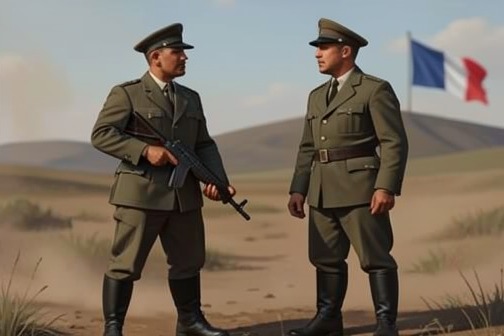
The [Battle of Algiers](entity:event-recall-event-battle-of-algiers-ec7da951d226) began in January 1957, as the [Algerian War](entity:time-recall-time-e1819e73205d) gathered pace and the [1st R.E.P.](entity:organization-recall-organization-2bff0614a64e) was repeatedly committed to action. In the novel’s account, the battle is also a marker in [Creasy](entity:character-recall-character-creasy-ee39d45de449) and Guido’s developing comradeship: Guido had become a Legionnaire first class by then, and the two men were increasingly treated as a formidable military partnership.
## Creasy and Guido During the War
After an earlier pursuit near Palestro, Creasy shared his rations with Guido and advised him on combat weapons. Guido, who carried a pistol and four spare clips, was urged to rely instead on his submachine gun and carry additional magazines. He took Creasy’s instruction seriously, regarding his sergeant as a model. By the time the Battle of Algiers began, Guido had made his mark and earned promotion.
Their relationship had grown gradually. At first, their few conversations were mostly about military matters, but as Guido’s knowledge increased, their exchanges became discussions between equals. The silences between them were comfortable rather than strained; each eventually recognized that he had found a friend. As the war intensified, Colonel Dufour recognized both their ability and their friendship. The regiment was constantly in action, and Creasy and Guido were assigned together whenever possible. Their partnership became well known throughout the Legion.
## The Regiment and the Political Crisis
The account places the Battle of Algiers within a wider conflict over the future of [Algeria](entity:location-recall-location-45224a85aa71). When it became apparent that de Gaulle was planning a political settlement, white settlers, the pieds noirs, reacted furiously and erected barricades in [Algiers](entity:location-recall-location-18d6df5687fc) in defiance of the army. Many professional soldiers sympathized with them, particularly the para units, which had borne much of the fighting.
The gendarmes were ordered to clear the barricades, with two para units, including the 1st R.E.P., sent in support. Both units dragged their feet, and the gendarmes suffered many dead and wounded. The account does not detail the Battle of Algiers’s individual engagements; instead, it connects the battle’s wartime setting to the regiment’s position in the political confrontation that followed.
## The Regiment’s Later Course
After the barricade operation, Colonel Dufour was relieved of command. The high command placed Elie Denoix de St. Marc temporarily in charge rather than appointing an officer selected for political reliability. St. Marc was described as tough, idealistic, and brave, and his men revered him. In 1961 he led the regiment into the generals’ rebellion against de Gaulle. The 1st R.E.P. became central to the plan, even arresting Gambiez, the Army Commander-in-Chief, but the expected support from the rest of the Legion did not materialize.
The rebellion failed. On [April 27, 1961](entity:time-recall-time-1961-4-27-8e80df68eb53), the 1,200 Legionnaires of the 1st R.E.P. dynamited their barracks and fired their ammunition into the air before leaving Zaralda. Pieds noirs lined the route and wept as the paras drove away singing Edith Piaf’s “Je ne regrette rien.” This later episode belongs to the regiment’s history rather than to the Battle of Algiers itself, but it frames the battle-era partnership of Creasy and Guido within a Legion whose military service became entangled with a political rupture.
Event 7
1961 Algiers putsch
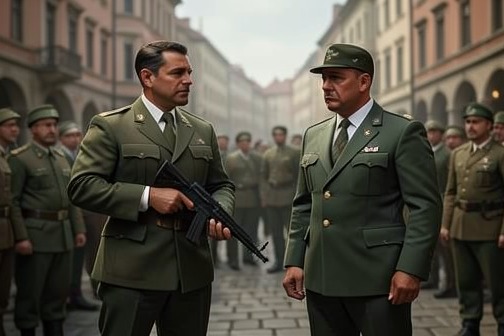
The [1961 Algiers putsch](entity:event-recall-event-1961-algiers-putsch-d49d34374357) was a failed military rebellion against de Gaulle’s planned political settlement of the [Algerian War](entity:time-recall-time-e1819e73205d). Its decisive force was the [French Foreign Legion](entity:organization-recall-organization-3a78bd1be731)’s [1st R.E.P.](entity:organization-recall-organization-2bff0614a64e), which took an active part while the rest of the Legion did not follow. The defeat ended the regiment and cost [Creasy](entity:character-recall-character-creasy-ee39d45de449) and Guido their positions, although, as Guido later explained, they had acted in obedience to their officers.
## Political setting and escalation
As a political settlement began to appear imminent, the white settlers known as the pieds noirs reacted with fury. In [Algiers](entity:location-recall-location-18d6df5687fc) they erected barricades and defied the army. The passage places the revolt within this escalating confrontation: the settlers resisted de Gaulle’s direction, while many professional soldiers sympathized with them, particularly the tough parachute units that had borne much of the fighting.
The gendarmes received orders to clear the barricades. Two parachute units, including the 1st R.E.P., were sent in support, but both delayed rather than carrying out their part promptly. The gendarmes suffered many dead and wounded during the operation. Colonel Dufour was then relieved of command. Instead of appointing an officer considered politically reliable, the high command placed Elie Denoix de St. Marc temporarily in charge.
St. Marc is presented as a forceful and idealistic Legion officer, uncompromisingly brave and worshipped by his men. He chose to lead them into rebellion against de Gaulle in 1961. The 1st R.E.P. consequently became the cornerstone of the generals’ plans: the uprising depended on a regiment whose soldiers trusted its commander and whose recent wartime experience had made it a formidable force.
## The rebellion and its defeat
The putsch’s organizers expected the rest of the French Foreign Legion to join them. That expectation proved mistaken. Only the 1st R.E.P. acted against the government; the wider Legion did not rise with it. The regiment’s participation was therefore both the rebellion’s central military commitment and the limit of its reach. The rebels even arrested Gambiez, the Army Commander-in-Chief, but this dramatic act did not bring the broader military support they had anticipated.
The rebellion failed. On [April 27, 1961](entity:time-recall-time-1961-4-27-8e80df68eb53), its twelve hundred Legionnaires dynamited their barracks and fired all their ammunition into the air. The scene joined military disbandment to public mourning: as the parachutists drove out of Zaralda, the pieds noirs lined the route and wept. The soldiers sang Edith Piaf’s “Je ne regrette rien,” a song that gave their departure the sound of defiance even as the failure of the putsch became irreversible.
## Disbandment and personal consequences
The 1st R.E.P. was disgraced and disbanded. The regiment had lost three hundred men in the war for France, but de Gaulle was described as being in a vengeful mood after the rebellion. Its rank and file were absorbed into other French Foreign Legion units. Its officers faced a different set of outcomes: some fled to join the [Organisation armée secrète](entity:organization-recall-organization-2e4727531979), described as an underground extremist army, while others surrendered to stand trial for mutiny.
The senior NCOs were discharged, including Creasy and Guido. Their removal gives the putsch a personal consequence beyond the dissolution of the regiment: the two men lost their positions despite having followed their officers’ orders. When [Pietro](entity:character-recall-character-pietro-15a75a7d05df) later asked Guido incredulously whether he had been expelled even though he had only obeyed orders, Guido did not deny the circumstances. He explained that political passion had shaped the period and recalled that, at one point, the men expected to parachute into Paris itself and arrest de Gaulle.
## Guido’s account and the event’s significance
Guido’s retrospective explanation also conveys the scale of what the rebels thought possible. The French people as a whole were horrified, he said, and with good reason: the French Foreign Legion then numbered more than thirty thousand men. If it had acted as a whole, Guido believed, nothing could have stopped it. The putsch thus exposed a danger that its failure did not erase: an armed force built for service abroad could, under the right command and political conditions, threaten the government at home.
In Guido’s account, the rebellion is at once a failed attempt to turn military loyalty into political power and the event that revealed the potential danger of the French Foreign Legion to France itself. The contrast between the 1st R.E.P.’s decisive action and the rest of the Legion’s refusal to follow explains why the generals’ expectations collapsed. For Creasy and Guido, the aftermath fixed that public crisis in private terms: discharge for obedience, and the loss of a military life they had built together.
Event 8
Katanga secession crisis
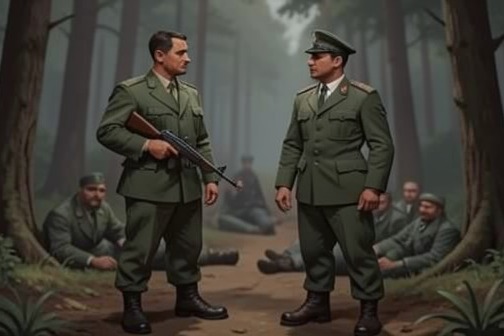
The [Katanga secession crisis](entity:event-recall-event-katanga-secession-crisi-4189c41b64da) is the turning point at which [Creasy](entity:character-recall-character-creasy-ee39d45de449) and [Guido Arrellio](entity:character-recall-character-guido-arrellio-e6b328784741) moved from military service into mercenary warfare, and the campaign helped forge the unusually close partnership that shaped their later lives. Recounted by Guido to a boy, it is presented not as a self-contained battle narrative but as the beginning of a continuing passage from one conflict to the next: the two men sought a war, found one in Katanga, and stayed together when its political cause failed.
## Background and Entry into the Conflict
Guido places their decision in the aftermath of Legion service. He and Creasy had little training beyond the military, Guido was still wanted by the police, and Creasy had nowhere to go. Together they searched for a war and found one in Katanga. Guido explains that Katanga was a province that attempted to break away in 1961, after the Belgians withdrew; it was later called Shaba. In his account, its distinct population and mineral wealth helped explain the secession effort and the attraction it held for outside fighters.
The crisis brought mercenaries to the province, including the two former legionnaires. They joined a French former paratrooper colonel, Trinquier, who already knew them from earlier service and was glad to recruit experienced men. The change from legionnaires to mercenaries was, in Guido’s telling, less a transformation of their skills than a change of setting: they carried their military training into another war. Their shared experience and the circumstances that had left both men without a settled place made the campaign a joint undertaking from the outset.
## Fighting Together
Creasy and Guido’s effectiveness rested on precise coordination rather than spoken instruction. They became so attuned to one another that they could move and fight as though they were a single unit, with little apparent communication. Their skill was especially visible in urban combat, where they cleared buildings by covering one another and moving from room to room, or from building to building, in a measured rhythm. Other mercenaries sometimes stopped to watch them work.
Their methods were not limited to movement through buildings. The account singles out their handling of grenades and submachine guns as exceptionally accomplished. These details establish the pair’s reputation among the mercenaries while also showing how their friendship operated in action: each man’s safety and movement depended on the other’s timing. Their military competence was therefore both a practical advantage and a visible expression of a partnership that needed no constant explanation.
## Failure and Further Wars
The secession failed, but the collapse of the cause did not end the men’s mercenary careers or separate them. They went with other mercenaries to Yemen under Denard, then returned to the Congo when Tshombe came back from exile. Under Denard’s French 6th Commando, Creasy and Guido fought through the complicated war until Mobuto triumphed. The sequence makes Katanga the first stage in a longer cycle: when one campaign closed, the pair moved together into another.
After Mobuto’s victory, they retreated with hundreds of other mercenaries to Bukavu and were interned in [Rwanda](entity:location-recall-location-d1e0bd5741f5) under the Red Cross. They had to surrender their weapons. For Guido, the following five months were torment: although there was room to move around, the restriction itself intensified his claustrophobia. This aftermath contrasts sharply with the mobility and mutual reliance that had defined the fighting. The men who had moved freely through urban combat as a coordinated pair were now disarmed and confined, and Guido’s account identifies that confinement as a serious personal strain.
## Friendship and Narrative Significance
Guido links the bond between the two men directly to the loss they shared after leaving the Legion. That sense of loss brought them closer, and their friendship developed into a rare intimacy between two men. The Katanga campaign thus matters beyond its military outcome: the secession failed, but the experience helped establish a durable partnership that endured subsequent wars, retreat, and internment.
The event is also presented through Guido’s retrospective explanation to a young listener. His account moves from the immediate reason the two men went to Katanga, through their methods in combat, to the failed secession and its consequences. That framing makes the crisis an origin point in the history of Creasy and Guido’s comradeship, rather than an isolated episode. Its decisive legacy in the narrative is the shared life in arms it began—and the closeness that continued even after the weapons had been taken away.
Event 9
Julia's fatal car accident
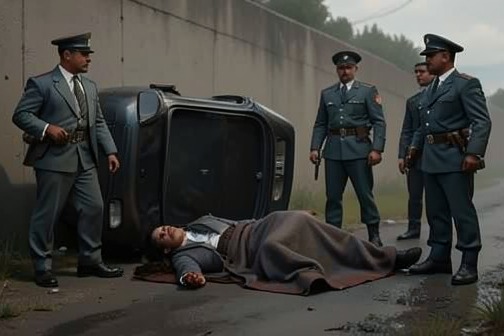
[Julia's fatal car accident](entity:event-recall-event-julia-s-fatal-car-accid-4f55b18ec368) abruptly turns a public celebration into a private catastrophe. [Julia](entity:character-recall-character-julia-dd9a6077f139) is killed by a car carrying eight drunken supporters in a convoy celebrating the local football team's victory; the accident leaves [Guido Arrellio](entity:character-recall-character-guido-arrellio-e6b328784741) bereaved and gives [Creasy](entity:character-recall-character-creasy-ee39d45de449) a point of painful recognition in his friend's grief.
## Circumstances
Julia had gone shopping when the supporters drove through the city, sounding their horns and waving flags after the local team's win. One car, with eight drunken occupants, lost control and struck her against a wall. The scene's force lies in the collision between festive momentum and irreversible loss: the convoy's celebration continues as background to an accident that has nothing to do with Julia's actions.
## Immediate Aftermath
Creasy arrived a week after Julia's death, tired from a long journey. Guido had forgotten to ask how Creasy knew what had happened. Creasy stayed for a couple of weeks, and his presence helped Guido get through the immediate aftermath. The narrative gives no account of the accident's investigation or of any punishment; its emphasis is on the quiet support that follows the loss.
## Consequences and Significance
Later, Guido sits in his car watching twilight over the bay and tries to imagine a life in which he had never known Julia. He can picture such a life, and that painful imaginative effort lets him understand Creasy. The accident therefore becomes more than the cause of Guido's bereavement: it provides him with an intimate measure of the isolation Creasy carries. Creasy's visit had helped Guido survive his loss, while Guido's memory of Julia now enables him to recognize what such a loss means to his friend.
Event 10
Creasy's hiring as Pinta's bodyguard
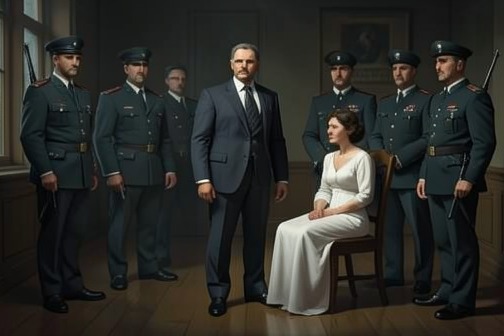
[Creasy's hiring as Pinta's bodyguard](entity:event-recall-event-creasy-s-hiring-as-pint-8687d4c92639) is both a contrivance and a turning point: [Ettore](entity:character-recall-character-ettore-4df63a1e4ff4) seeks a low-cost way to satisfy [Rika](entity:character-recall-character-rika-f2d428d5e31b) and reduce insurance expenses, but the nominal post brings [Creasy](entity:character-recall-character-creasy-ee39d45de449) into [Pinta](entity:character-recall-character-pinta-8e1a6ba323b3)'s life and becomes the setting for a real bond. What is presented as a practical arrangement gradually acquires a meaning its organizers did not intend, even as later revelations expose how closely the hiring was entangled with a kidnapping-for-ransom fraud.
## The proposal: security as a financial calculation
Ettore turns to his friend and lawyer, [Vico Mansutti](entity:character-recall-character-vico-mansutti-35a27592bd5d), hoping that Vico will explain the family's financial position to Rika. Instead, Vico's proposed solution is to hire a bodyguard. He describes a market strained by terrorism and a shortage of trained guards, with strong demand and rising prices. A genuinely capable full-time bodyguard, he says, would cost about thirty million lire a year, making the suggestion seem to Ettore like an added burden rather than an answer to his financial problems.
Vico then connects the post to kidnapping insurance. Italian insurance companies cannot issue policies covering ransoms, because the government believes such coverage might encourage kidnapping; foreign insurers can, and [Lloyd's of London](entity:organization-recall-organization-1898895a5b8b) is a leading provider. Vico explains that premiums must be paid outside [Italy](entity:location-recall-location-italy-85c2492cd54b) and that the insured must keep the policy secret. Security measures can lower the premium: in his example, a one-billion-lire policy might cost fifty million lire at a five-percent rate, but hiring a full-time guard could bring the rate down to three percent, or thirty million lire. That twenty-million-lire reduction would not justify a thirty-million-lire salary on its own.
The workaround is the cheap, nominal guard Vico calls a premium bodyguard. Such a man, Vico says, would do little to stop an actual kidnapping, but could still qualify the client for a lower insurance rate. At around seven million lire a year, this apparent security could make the policy cheaper overall. Ettore initially objects that he does not want insurance against a kidnapping he believes will not happen. Then he grasps the other purpose: a temporary hire will make it appear that the family has acted on Rika's concerns, allowing Pinta to return to school and Rika to save face. The proposed job is thus designed less around protection than around the appearance of protection and the management of household tensions.
## Guido recruits Creasy
The recommendation reaches Creasy through Guido, who relays an idea from his brother [Elio](entity:character-recall-character-elio-81a02415d407). Elio, educated with Guido's help and now an accountant at an auditing firm in [Milan](entity:location-recall-location-617379caf4c2), has a client connected to a security agency that supplies bodyguards to industrialists. The agency's demand for trained men is high, but this job is not for a trained protector: Elio has explained the premium-bodyguard arrangement to Guido.
Guido knows that Creasy has money saved from years of work and that the poor pay therefore need not be decisive. The more serious objection is Creasy's condition. He is unfit and virtually an alcoholic; Guido recognizes that taking the post could mean accepting work under false pretenses. Creasy himself sees the absurdity and says that, in his state, he could not guard even a corpse. Guido does not pretend that the job suits him as a conventional security assignment. He gently presses Creasy to come to Milan, stay with Elio for a few days, and see what work is available. Creasy considers further objections, but finally agrees to look into it, still incredulous at the prospect.
## Terms and entry into the household
The search proves less simple than Vico's proposal made it sound, because Rika has her own requirements for the person who will guard Pinta. Once the arrangement takes shape, Rika and Pinta prepare a large room at the top of the house, furnishing it with a small table, a large easy chair, and rugs. The room already has a brass bedstead, a chest of drawers, and a wardrobe. Creasy is to eat in the kitchen with Maria, the housekeeper, and Bruno, the gardener, rather than be absorbed into the family's social life.
Rika's list of duties makes the everyday nature of the assignment plain. Creasy is principally to drive Pinta to school and collect her in the afternoon; between those trips, he is available to chauffeur Rika to shopping and lunch engagements. He tells Ettore that he is no good at social chitchat but will do the job as well as he can. Asked whether he has a gun, he says the agency provides one and that Ettore must supply a letter so the agency can arrange a police permit, with the cost added to the bill. Ettore asks him to start immediately and requests that his drinking problem be kept from Rika. Their agreement is a three-month trial contract, after which both sides can review whether to continue.
## From nominal protection to care
The gap between the hiring rationale and Creasy's actual conduct becomes visible in an accident on the steep slope behind the house. When Pinta falls while trying to see a nightingale's nest, Creasy hears her cry, examines her ankle and ribs, and judges that she should be taken into [Como](entity:location-recall-location-como-207e921ed45c) for an X-ray. He calms the anxious Maria, tells Bruno to stay at the house in case Pinta's parents call, and carries the injured girl carefully down to the car. His response is automatic, shaped by a life spent dealing with wounded people, but to those around Pinta it is also reassuring evidence of care. A position created to satisfy a policy and preserve appearances begins to involve the very attentiveness that its cheap, symbolic version was never meant to guarantee.
Creasy later describes the change as gradual but inexorable: at first he deliberately shut Pinta out, and then the two of them grew close. When he recounts Pinta's life and death to Nadia, he recalls the day in the mountains when Pinta gave him a crucifix as the happiest and most natural day of his life. Nadia understands Pinta through his account and grieves for her as if she had been her own child. The hiring therefore marks the beginning of a relationship that outgrows the terms of employment: Pinta's curiosity and trust draw Creasy back toward feeling and responsibility, and her death gives his later actions their personal force.
## The arrangement exposed
The initial explanation of the post as a cheap insurance device proves incomplete. When the facts about the low-paid hire come out, Rika learns that Creasy was brought in for a pittance merely to appease her. She reacts with fury, calling him a drunk and accusing Ettore of placing a boy-scout-level protector between her daughter and danger. Her anger identifies the arrangement's central failure: it had answered her demand in form while withholding the protection she believed she was asking for.
Later, Creasy tells Rika what he learned from [Fossella](entity:character-recall-character-fossella-ea8d4ea69691): Pinta's kidnapping was itself an insurance setup. Ettore had taken out a two-billion-lire policy with Lloyd's of London, with Fossella to return half the ransom to him; Vico Mansutti acted as intermediary and received a commission through his organized-crime connections. This revelation gives the earlier hiring a more sinister context. The cheap guard had been discussed as a way to lower premiums and placate Rika; the later disclosure shows a policy, a kickback, and a kidnapping arranged for profit. Rika's hatred turns toward Ettore as Creasy finishes explaining. The appointment that began as a calculated compromise thus stands at the intersection of genuine protection, insurance incentives, family deception, and the bond that made Pinta's fate devastating to Creasy.
Event 11
Milan Red Brigades assassination witnessed by Rika
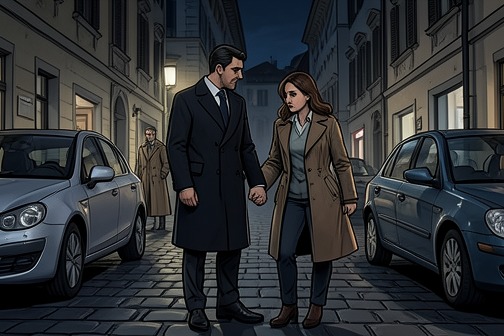
The [Milan Red Brigades assassination witnessed by Rika](entity:event-recall-event-milan-red-brigades-assa-53ee97c789bc) Balletto is a sudden street killing that turns a routine outing into a test of [Creasy](entity:character-recall-character-creasy-ee39d45de449)’s protection and [Rika](entity:character-recall-character-rika-f2d428d5e31b)’s assumptions about violence. Creasy gets her out of the line of fire, but his decision not to shoot and his later recognition that he has grown slow make the episode more than a demonstration of competence: it is also an alarm about the deterioration of the body on which his work depends.
## Background and Security
Rika’s fear of kidnapping had already shaped family discussions about where [Pinta Balletto](entity:character-recall-character-pinta-balletto-e7c88936c38e) should live. She argued that their daughter’s safety was at stake and recalled a child being taken outside a school in [Milan](entity:location-recall-location-617379caf4c2) in broad daylight. [Ettore Balletto](entity:character-recall-character-ettore-balletto-2a8f4bd883b5) answered that the family could not afford the move Rika wanted and that they were not rich enough to make [Pinta](entity:character-recall-character-pinta-8e1a6ba323b3) an obvious target. The argument sets the assassination against a world in which danger is both an immediate possibility and something people try to assess through money, routine, and exposure.
Creasy approached his new work as a bodyguard in military terms. He treated the person under his protection as an asset and considered where an attacker might try to seize her: at home, at another regularly visited place, or on the way between them. He judged the road the likeliest point of attack and planned to vary the route. During the drive to Pinta’s school, he noted bends where a car would have to slow away from buildings. At the school itself, he examined the spiked walls, heavy gates, watchman, and grounds, deciding that the building was reasonably secure. This careful attention to predictable routes makes the later street attack especially revealing: the danger does not arrive at a site he has marked as vulnerable, but during Rika’s ordinary passage through Milan.
## The Street Shooting
On an overcast day, Rika left a hairdresser’s and looked for the car, parked about thirty meters away with Creasy standing beside it. Across the street, two men sprang from the side door of a Volkswagen van and ran toward a man unlocking a white Fiat. Rika saw their guns as the first shots rang out. The man turned and reached under his jacket; Creasy reached Rika, swept her off her feet, and pulled her into a shop doorway, covering her as glass shattered above them.
The scene gives protection a physical, immediate form. Rika is on the pavement beneath Creasy’s body while shots continue; she sees his gun held low at his side. The van door slams, its engine races away, and the street falls quiet. Creasy then tells her to stay where she is and carefully backs away so that falling glass will not strike her. Across the street, the victim lies over the Fiat’s bonnet, blood on the white metal. Rika understands instinctively that he is dead. Creasy helps her up, walks her to the car, and puts her in the back seat as people begin moving again, a woman sobs, and a siren approaches.
The attack is identified as a [Red Brigades](entity:organization-recall-organization-d246926e7c04) killing, with the victim a prosecuting attorney; the narration presents such a killing as not unusual in Milan. Creasy gives the police his bodyguard’s license and reports what he saw. His description of the gunmen is so broad that it could fit a hundred thousand young men in the city, but he also gives them the Volkswagen’s number plate, which he knows is stolen. He does not claim to have seen more than he did, and his limited identification illustrates the difficulty of turning a fast, chaotic attack into useful information for the police.
## Rika’s Witness and Creasy’s Decision
On the drive home, Rika breaks her silence to condemn the gunmen and asks why Creasy did not shoot when she saw the gun in his hand. He explains that firing at the men on foot would have exposed them to another attacker in the van, who had a sawed-off shotgun. The victim had managed to fire once, but the shot passed only a couple of feet over them. Creasy’s restraint is therefore not indifference: he judges that a gun battle could have placed Rika in greater danger. His first task was to get her out of the attackers’ line of fire, not to pursue them.
For Rika, the event breaks the boundary between violence as something seen on television and violence in her own surroundings. She visibly composes herself during the drive and picks a tiny shard of glass from Creasy’s hair. Later, she replays the sudden movement, the breaking glass, the weight of Creasy over her, and her fear. She remembers his stillness as well as the scarred hand he had used to steady her face. She considers him unaffected by the dead man, and the experience confirms for her that the bodyguard has justified his presence. Although she thinks she will tell [Ettore](entity:character-recall-character-ettore-4df63a1e4ff4) about the attack, she postpones the call until morning; the shock continues after the immediate danger has passed.
## Consequences for Creasy
Creasy’s private assessment is less reassuring. He decides that if Rika had been the target, she would now be dead. He believes that, in the past, he could have shot the man with the shotgun and the two attackers on foot before they had gone five paces. He judges the gunmen to be determined but inexperienced, and thinks their method was clumsy: the shotgun, used from the van, would have been more certain. Yet his central conclusion is not about their mistakes. He has been slow, and his reactions are dull.
The shooting thus exposes the gap between the protector Creasy intends to be and the one his neglected condition currently allows him to be. He has long treated his body as a weapon, maintaining and rehabilitating it as he would his other weapons. Now it is only barely overweight to the eye, but [Guido Arrellio](entity:character-recall-character-guido-arrellio-e6b328784741), who remembers his former condition, could detect the slackness and lost muscle tone. Creasy sees a fine machine rusted through neglect, one that cannot be restored with the quick cleaning or lubrication he might give a gun. He expects a long, painful rebuilding: ten minutes of circuit training each morning at first, followed gradually by gym work with weights and bars. The assassination does not cause his decline, but it makes the danger measurable. Rika survives because Creasy moves decisively to shelter her; afterward, he recognizes that survival in this instance is no proof that his protective capacity remains intact.
Event 12
Kidnapping and murder of Pinta Balletto
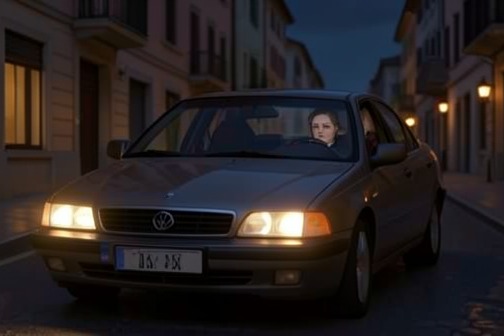
The kidnapping and murder of [Pinta Balletto](entity:character-recall-character-pinta-balletto-e7c88936c38e) turns a carefully anticipated security threat into catastrophe: [Creasy](entity:character-recall-character-creasy-ee39d45de449) kills two of the attackers but is shot as the car escapes with [Pinta](entity:character-recall-character-pinta-8e1a6ba323b3), who later dies in captivity despite payment of the ransom. The event begins in the ordinary space between an apartment and a waiting car, then widens through its aftermath into a more brutal account of the gang’s negligence, prolonged detention, and repeated sexual violence.
## Background and Security
Before the abduction, [Rika](entity:character-recall-character-rika-f2d428d5e31b) had argued that Pinta’s safety required a change of circumstances. She proposed spending much of the winter in Geneva, where she could be with Pinta on weekends while [Ettore](entity:character-recall-character-ettore-4df63a1e4ff4) flew over from [Milan](entity:location-recall-location-617379caf4c2). Ettore answered that the apartment in [Rome](entity:location-recall-location-rome-3ec0a741c1f4) was mortgaged, its sale proceeds would go to the bank, and the bank would not lend him money to buy property abroad. Geneva, he said, was so expensive that even a place they could afford would be too small for Rika. Rika remained unmoved: citing the Macchetti child, taken outside his school in Milan in broad daylight, she insisted that Pinta was at risk. Ettore countered that the Macchettis were among Milan’s richest families and that the Balletto finances were known to be poor. The disagreement establishes both the family’s anxiety and the financial limits that kept them from acting on Rika’s preferred solution.
Creasy approached his new bodyguard assignment through a military model. He treated Pinta as an asset that an enemy might seize at home, at a regular destination, or along the route between them. He identified the road as the most likely point of attack and planned to vary the daily journey at random. On the drive to Pinta’s school, he watched for bends where a vehicle would have to slow and where buildings offered little cover. At the school, he noted the spike-topped walls, the exposed approach to the heavy gates, and the watchman who admitted them through a shuttered entrance. Inside, he assessed the grounds, including the playing field and running track, the copse set back from the wall, and the building itself, which he judged reasonably secure. The detailed inspection makes the later attack a sharp reversal: preparation has taught Creasy to anticipate an ambush, but it cannot eliminate the vulnerability of Pinta’s everyday movements.
## The Abduction and Gunfight
The attack comes as Pinta leaves her apartment. Creasy is sitting in the car with a newspaper when the apartment door shuts; Pinta waves and starts toward him. She is still about forty meters away when a black car rounds the corner behind Creasy and mounts the curb onto the grass. He sees four men, recognizes the attack, and rushes out for his gun. Pinta stops in surprise, and Creasy shouts for her to run.
The attackers bring the black car to a skid in front of Pinta, cutting off her path to Creasy. Two men jump from the back. Pinta ducks beneath a reaching arm and runs around the car toward her bodyguard, with both men pursuing her and carrying revolvers. Creasy hesitates to fire while she is between them. One man catches her, lifts her, and turns back toward the car; the other faces Creasy and fires high. Creasy shoots him twice in the chest. The second attacker struggles to force Pinta into the back seat while she screams, kicks, and fights him. By the time he has thrown her inside and turns with his gun coming up, Creasy is close enough to shoot.
Creasy aims high, fearing that a bullet might ricochet into the car. His shot strikes the gunman below the nose, travels upward into the brain, and slams the body against the door as it closes. Three shots from the front seat bring Creasy down. The car accelerates away, its wheels spinning before they grip the road; Pinta screams his name as she is carried off. Wounded and unable to move, Creasy hears her cry and understands it not as a call for help but as an anguished response to seeing him fall. The escape leaves the central protective relationship of the scene violently broken: he has stopped two attackers, but not the abduction.
## Death in Captivity
While Creasy lies wounded, the ransom is paid. Guido later tells him that Pinta was supposed to be released that night, two days after payment, but did not appear. The next morning police find her in the trunk of a stolen car. During a major sweep for a [Red Brigades](entity:organization-recall-organization-d246926e7c04) gang, the kidnappers had become nervous and hidden for several hours. Pinta’s hands and mouth were taped; she vomited, probably because of petrol fumes, and the autopsy determined that she choked to death. The ransom’s payment therefore does not secure her release: she dies while the kidnappers are lying low, and the promised return never takes place.
Guido’s first explanation is followed by a second revelation. Asked whether there is anything more to know, he tells Creasy that Pinta had been raped repeatedly and had bruises on her shoulders and arms. The disclosure changes the meaning of the captivity from a failed exchange into an extended ordeal of assault. Creasy turns his head away and remains expressionless as Guido gives him the news; the silence and empty look register the blow without softening it into a scene of consolation.
## What the Investigation Reveals
Later, [Giorgio Rabbia](entity:character-recall-character-giorgio-rabbia-c6d726ed2eed)’s answers supply details absent from the initial account. He says that he drove the kidnapping car and identifies [Sandri](entity:character-recall-character-sandri-1e886abea647) as the man who shot Creasy’s bodyguard. The other dead men were Dorigo and Cremasco. Rabbia says he knew nothing about the ransom money: the gang had simply been ordered to collect Pinta at a specified time and place and hold her in a house in Niguada.
Rabbia describes a badly managed operation from its outset. [Fossella](entity:character-recall-character-fossella-ea8d4ea69691) had said the bodyguard would not be much of a problem and instructed Dorigo to fire a couple of shots to frighten him away. Instead, the attackers met armed resistance and the job became a mess. When asked who raped Pinta, Rabbia immediately names Sandri, explaining that Sandri was angry because Dorigo had been a good friend and that Pinta had fought and scratched his face. Rabbia then acknowledges that there was more: after Sandri, he says, he thought it made no difference. The captors had expected to be finished in a few days, but trouble with the ransom kept them at the house for more than two weeks. The testimony connects the assault described after Pinta’s death to the gang’s extended detention and exposes how casual its members were about the harm they inflicted.
The event’s force lies in the gap between a security problem Creasy can map and a human disaster his planning cannot prevent. Routes, walls, gates, and armed response shape the attempted rescue, yet Pinta is taken in the interval before she can reach the car. Her death follows not from the ransom remaining unpaid but from the captors’ delay and the conditions of confinement; the later interrogation adds the repeated rape that Guido’s first account did not disclose. Together, the attack, the failed release, and the testimony turn the kidnapping into the decisive loss behind Creasy’s subsequent pursuit of those responsible.
Event 13
Creasy's revenge campaign
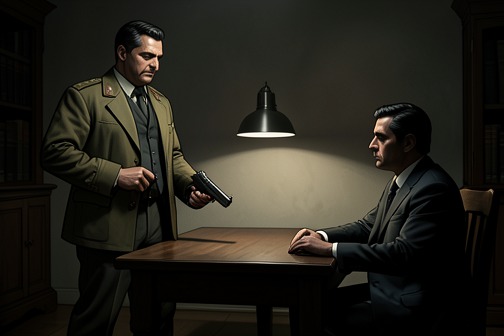
[Creasy](entity:character-recall-character-creasy-ee39d45de449)’s revenge campaign is the armed vendetta he undertakes after [Pinta](entity:character-recall-character-pinta-8e1a6ba323b3) dies in captivity: not a conventional effort to secure justice, but a deliberate attempt to kill those responsible, reaching upward through the criminal network behind her kidnapping. Its decisive turn comes when private grief becomes an explicit, far-reaching objective, with [Guido Arrellio](entity:character-recall-character-guido-arrellio-e6b328784741) drawn in as his indispensable ally.
## Origins and Declared Aim
Pinta’s death gives Creasy’s campaign its cause and its uncompromising logic. The ransom had been paid two days before she was due to be released, but the kidnappers, alarmed by a police sweep against a Red Brigade gang, went to ground for several hours. Her hands and mouth were taped; after vomiting, probably from petrol fumes, she choked to death in the trunk of a stolen car. What should have ended in her return instead leaves Creasy facing a death that was not intended but cannot be undone.
When Creasy explains his plan to Guido on the terrace, he does not present it as a legal or moral remedy. He says it is revenge: someone precious to him has been killed, and he will kill in turn. Guido asks whether Creasy means an eye for an eye. Creasy answers that he wants more than an eye, naming the scale of his intended retaliation in a stark declaration: "More than that. More than an eye. Every bloody piece of them." The exchange makes the campaign personal, but not narrowly limited to the immediate kidnappers.
Guido initially imagines a focused operation against the men who carried out the abduction: Creasy could pick them off and escape, since they were probably not senior figures. Creasy corrects that assumption. He intends to pursue anyone who had a hand in the crime or profited from it, all the way to the top of what he calls the nest. The change in scope is fundamental: the campaign is directed not only against the men at the scene, but against the chain of responsibility behind them.
## Methods, Targets, and the First Interrogation
Creasy frames his campaign as a response to the weakness of ordinary enforcement. Guido describes a Mafia able to draw on informers and contacts within police forces, with networks extending from cities into smaller communities; past attempts to suppress it had not prevented its return. Creasy’s answer is not to gather evidence for a prosecution. He identifies three advantages he believes the police lack: he can use terror, extract information by moving from one target to the next, and act with the direct purpose of killing. He regards his lack of family, career, and other obligations as a source of motivation that distinguishes him from policemen and judges. The plan is therefore designed to operate outside the institutions he considers compromised and limited.
That strategy becomes concrete in Creasy’s choice of initial targets. Before setting out, he tells Guido that [Giorgio Rabbia](entity:character-recall-character-giorgio-rabbia-c6d726ed2eed) and [Sandri](entity:character-recall-character-sandri-1e886abea647) come first, but that he needs to question only one of them. He judges Rabbia, described to him as a slow-witted enforcer, more likely to break than Sandri, and plans to watch him for several days before taking him. The sequence is deliberate: identify a vulnerable participant, seize him, and turn his account into information about the larger operation. Creasy’s campaign is conceived as a chain in which each captured person can point toward another level of responsibility.
Creasy abducts Rabbia at his car, bringing a concealed gun to the back of his neck as Rabbia reaches for the ignition. He identifies him by name and warns him not to speak. Later, in the room where he questions him, Creasy places steel spikes and a knife before him and threatens to drive a spike through his untaped left hand and cut off his fingers if he refuses to answer truthfully. The threat is not incidental intimidation: it makes explicit the coercive method Creasy had announced to Guido, using fear as an instrument to produce intelligence rather than as an end in itself.
The interrogation begins with the Balletto kidnapping and continues for more than an hour. Rabbia admits that he drove the car and identifies Sandri as the man who shot Creasy, the bodyguard; he names Dorigo and Cremasco as the other men involved. He says the group had been ordered to collect Pinta at a specified time and place and hold her in a house in Niguada, while claiming not to know about the ransom money. The testimony gives Creasy the division of labor within the abduction and confirms that the plan had been carelessly organized: [Fossella](entity:character-recall-character-fossella-ea8d4ea69691) had said the bodyguard would not be a serious obstacle, and Dorigo had been told to fire shots merely to scare him away. Rabbia’s account thus moves the campaign beyond retaliation against the men who physically seized Pinta, supplying a route toward those who arranged the crime.
## Escalation, Investigation, and the Hidden Motive
The first killing makes Creasy’s campaign visible beyond its immediate participants. On Saturday morning, Guido reads a brief newspaper report that Giorgio Rabbia has been shot dead; the item is only a few lines, but Guido understands its meaning and tells his companion to pack for [Gozo](entity:location-recall-location-gozo-cb74bb5c2b90). The quiet notice marks the beginning of a sequence whose significance is clearer to those who know the kidnapping than to the city at large.
The violence soon draws scrutiny from [Mario Satta](entity:character-recall-character-mario-satta-c761906fa1e1) and [Massimo Bellu](entity:character-recall-character-massimo-bellu-8ef6c5ac868d). After Sandri’s death, Satta suspects the [Union Corse](entity:organization-recall-organization-union-corse-57b145512c40) and worries that its preference for knives and shotguns will turn the conflict into a wider war, catching innocent people in the crossfire. He also wonders what Sandri’s associate Rabbia may have revealed before dying. The investigation brings the officers back to Pinta’s kidnapping: Rabbia and Sandri had worked together, while Fossella organized the operation. Satta initially doubts that the bodyguard could be responsible for the unfolding violence, but inquiries establish that he had been a mercenary, had recovered from his wounds with conspicuous determination, and had left [Italy](entity:location-recall-location-italy-85c2492cd54b) for [Malta](entity:location-recall-location-malta-24a59bb3fa9f). The police trail reaches Guido, whose connection to Creasy gives Satta another route into the campaign.
Creasy’s pursuit of responsibility ultimately exposes a motive more calculated than the kidnappers’ account suggested. He tells [Rika](entity:character-recall-character-rika-f2d428d5e31b) that Fossella described the abduction as an insurance scheme: [Ettore](entity:character-recall-character-ettore-4df63a1e4ff4) had taken out a two-billion-lire policy with Lloyd’s of [London](entity:location-recall-location-1bfd335cdd1b), and Fossella was to return half the ransom to him. [Vico Mansutti](entity:character-recall-character-vico-mansutti-35a27592bd5d) had acted as intermediary, using his organized-crime connections for a commission. Rika’s attention remains fixed on Creasy as he explains the arrangement; when she turns toward Ettore, her hatred makes the betrayal unmistakable. The revelation changes the meaning of the crime: Pinta was not merely caught in a kidnapping that went wrong, but made the intended object of a scheme in which her father had participated.
The campaign’s reach is also reflected in the attack on [Floriano Conti](entity:character-recall-character-floriano-conti-0d134be68819). At 2:30, [Conti](entity:character-recall-character-conti-9c96f0538af3) leaves a basement garage in an armored Cadillac, accompanied by a second car carrying four bodyguards. From across the avenue, an attacker fires two projectiles: the first pierces the Cadillac’s radiator and destroys its engine, setting the occupants inside ablaze; the second strikes below the front axle and hurls the five-ton vehicle backward into the following Lancia. Only one bodyguard escapes immediate death. The assault carries the vendetta into the upper ranks of the criminal order and turns an individual pursuit into a shock to the wider organization.
That shock persists beyond the immediate killings. A month after the event reported in the press as the [Battle of Palermo](entity:event-recall-event-battle-of-palermo-d2af0ef842c1), reporters still follow the struggle to keep Creasy alive. His actions have not produced a clean return to justice or an uncomplicated victory: they have exposed the kidnapping’s financial conspiracy, provoked a widening contest among criminal forces, and left their author gravely wounded. The campaign’s consequence is therefore double-edged: it brings hidden responsibility into view while multiplying the violence through which that responsibility is answered.
## Persistence and Aftermath
Even after Nadia enters his life, Creasy does not relinquish the vendetta. When Guido asks whether he remains determined, Creasy answers that nothing has changed and that the desire for his targets is an ache. Guido wonders whether Nadia has taken away some of the hatred; Creasy’s continued resolve shows that the relationship has not displaced the campaign. He proceeds on the same course, treating the pursuit as an obligation that intimacy cannot undo.
The campaign’s consequences extend into a public struggle over Creasy’s survival. A month after the [Palermo](entity:location-recall-location-palermo-b16a2f0e892c) assault was headlined as the Battle of Palermo, reporters were still following his condition. He had been given little chance in intensive care in Palermo, but survived; after two weeks, Mario Satta arranged for a special [Carabinieri](entity:organization-recall-organization-carabinieri-99a0f4b22ff4) aircraft to take him to the better-equipped and more secure [Cardarelli Hospital](entity:organization-recall-organization-c84ba67cdd46) in [Naples](entity:location-recall-location-naples-13ce8e2c4961). Satta’s brother led the medical team treating him. The story that began as private revenge had become a widely watched battle for life, while the campaign’s final human cost remained unresolved.
Event 14
Pinta Balletto kidnapping
The [Pinta Balletto kidnapping](entity:event-recall-event-pinta-balletto-kidnappi-7efc8a860f5e) begins as a feared threat to a child and ends as an insurance scheme built around her vulnerability. [Pinta Balletto](entity:character-recall-character-pinta-balletto-e7c88936c38e) was taken in an armed street attack despite [Creasy](entity:character-recall-character-creasy-ee39d45de449)’s efforts to protect her; the ransom was paid, but she died before her release. The later revelation that [Ettore Balletto](entity:character-recall-character-ettore-balletto-2a8f4bd883b5) had helped engineer the crime transforms the tragedy: the danger [Rika Balletto](entity:character-recall-character-rika-balletto-bd8caff1f70f) feared was not merely exploited by outsiders, but arranged through her own family and its associates.
## Background and the insurance scheme
[Rika](entity:character-recall-character-rika-f2d428d5e31b) pressed [Ettore](entity:character-recall-character-ettore-4df63a1e4ff4) to find a way to keep [Pinta](entity:character-recall-character-pinta-8e1a6ba323b3) safe, invoking the [Kidnapping of Pepino Macchetti](entity:event-recall-event-kidnapping-of-pepino-ma-e228623f01d1): the child had been taken in broad daylight outside his school in [Milan](entity:location-recall-location-617379caf4c2). Ettore argued that nobody would target their daughter because the Balletto family was not rich, even as his financial problems were becoming known in the city. His reassurance concealed a different calculation.
[Vico Mansutti](entity:character-recall-character-vico-mansutti-35a27592bd5d) explained how kidnap insurance could make a nominal security arrangement financially attractive. Italian insurers were barred from writing such policies, while [Lloyd's of London](entity:organization-recall-organization-1898895a5b8b) offered coverage subject to offshore premium payments and strict secrecy. A full-time bodyguard could reduce the premium, but Vico described cheaper premium bodyguards who were unlikely to foil a kidnapping and cost about seven million lire a year. The proposed economy depended on protection being legible to insurers, not necessarily effective against kidnappers.
The eventual disclosure gives that arrangement its criminal meaning. Creasy tells Rika that Ettore had taken out a two-billion-lire policy with Lloyd's of London, with [Fossella](entity:character-recall-character-fossella-ea8d4ea69691) to return half the ransom to him. Vico had acted as intermediary and stood to receive a commission. The insurance that appeared to manage the family’s exposure to kidnapping had instead become part of the plot’s financial design.
## The abduction
Creasy approached his new bodyguard job in military terms, treating Pinta as an asset and considering how an enemy might seize her at home, at school, or on the road. During reconnaissance at the school, he noted its high, spike-topped walls, heavy gates, and limited cover outside. On the route between the family’s home and the school, he marked likely ambush points and considered varying the journey to make it less predictable.
The attack came away from the school. As Pinta walked toward Creasy’s car, a black car mounted the curb and four men emerged. Creasy recognized the kidnapping attempt and shouted for her to run. Pinta ducked beneath one attacker’s reaching arm and darted around the car, but two armed men pursued her. With Pinta between them, Creasy hesitated to fire; one man caught her and carried her back toward the car. The other fired at Creasy, who shot him twice in the chest. The gunfire did not stop the abduction: Pinta was taken while Creasy survived the exchange.
## Death and immediate aftermath
The ransom had been paid two days before Pinta’s death, and she was supposed to be released that night. A major police sweep for a Red Brigade gang had, according to the account later given to Creasy, made the kidnappers nervous; they went to ground for several hours instead of releasing her. Police found Pinta in the trunk of a stolen car the following morning. Her hands and mouth had been taped, and she had vomited, probably from petrol fumes. The autopsy established that she had choked to death.
The account describes her death as unintended by the kidnappers, but that does not lessen the consequences of the scheme or the failure of the protection surrounding her. Creasy had identified the road as a likely point of attack, yet his tactical preparation could not overcome the attackers’ numbers or the compromised arrangement that had placed him there as a cheap, largely symbolic guard. Rika later learned that Creasy had been hired for a pittance merely to appease her, and condemned the choice as inadequate protection for her daughter.
## Exposure and consequences
The kidnapping also became a point of criminal reckoning. When senior figures in the Mafia discussed Fossella’s conduct, they described the Balletto girl’s abuse and death in the car as a badly handled operation that had provoked public dislike and weeks of pressure. They faulted Fossella for failing to punish those responsible severely, noting that one was his nephew and that he had only confiscated the kidnappers’ share. Their discussion treats discipline and reputation as business concerns, while the earlier disclosure to Rika reveals the personal cost concealed by that language.
The investigation eventually connected Rabbia and [Sandri](entity:character-recall-character-sandri-1e886abea647) to the kidnapping and identified Fossella as its organizer. When Creasy disclosed the insurance arrangement, Rika turned from him to Ettore with hatred; Ettore slumped in his chair and could not meet her gaze. Her immediate question about whether Creasy had killed the other perpetrators marks the disclosure as more than an explanation of the crime: the kidnapping has exposed a betrayal within the family and brought its consequences into Creasy’s campaign of revenge.
Event 15
Assassination of Floriano Conti
The assassination of [Floriano Conti](entity:character-recall-character-floriano-conti-0d134be68819) destroys [Conti](entity:character-recall-character-conti-9c96f0538af3)’s Armored Cadillac in a two-missile strike and kills the man [Don Cantarella](entity:character-recall-character-don-cantarella-e989c22e8294) relied on as his right arm. Its immediate violence is followed by a wider political shock: [Cantarella](entity:character-recall-character-cantarella-af667dcc0c29)’s fear reshapes security around [Villa Colacci](entity:location-recall-location-villa-colacci-4ab110095878), while [Mario Satta](entity:character-recall-character-mario-satta-c761906fa1e1) later judges that Conti’s death has helped make Cantarella’s mainland power impossible to restore.
## Preparation and Target
The attack follows a quiet domestic moment: Conti has just finished lunch in the penthouse across the avenue. At precisely 2:30, he comes out of the lift into the basement garage with his personal bodyguard. The Cadillac is waiting with its engine running, and a black Lancia carrying four more bodyguards waits behind it. Conti settles into the back seat; his bodyguard closes the door and takes the place beside the driver. The two cars begin moving up the ramp.
Across the avenue, Giuseppe has watched a man assemble a weapon. The man joins two thick tubes, fits an attachment into a grooved slot, and loads a squat, cone-shaped missile after depressing its fins. Giuseppe, who served in the army when he was young, recognizes that the tube is sophisticated and guesses that its attachment is a sight. The man takes a second missile and goggles, then moves into a back yard and peers over the low wall facing the avenue. The attack is thus prepared in view of witnesses, but from a position that conceals the shooter until the cars emerge.
## The Strike
At street level, sunlight makes the men in the cars narrow their eyes. They nevertheless see a figure rise behind the wall, goggles distorting his face and a tube resting on his shoulder. Before they can react, flame bursts from the tube and the missile speeds toward the Cadillac. The driver brakes hard, making the heavy car dip and rebound on its reinforced springs, but the missile pierces the radiator, wrecks the engine, and burns the interior. The car teeters upright on its rear fender. A second missile strikes below the front axle and throws the five-ton vehicle backward onto the Lancia.
The force of the second impact turns the following car into part of the wreckage. A rear door flies open and one bodyguard gets out on all fours. He scrambles away from the hissing, twisted metal, stands, and pulls his gun. His first instinct is to run up the ramp, but he stops and looks back at the destruction. Shock overwhelms the impulse to fight: he backs into the garage wall, sinks onto his haunches, and lets the gun fall onto the concrete. He remains there when the first police car arrives. The scene offers no composed pursuit of the attacker, only a survivor immobilized by the scale of the violence.
## Cantarella’s Response
Conti’s death strikes at the center of Cantarella’s authority. Conti had been his right arm, the physical instrument through which diplomacy was carried out. Cantarella tries to hide his fear, but [Maurizio Dicandia](entity:character-recall-character-maurizio-dicandia-e77ba0211321) and [Cesare Gravelli](entity:character-recall-character-cesare-gravelli-a87d39667986) recognize it. They are alarmed, yet their own wealth, status, and ambitions depend on their boss, so they listen as he orders Villa Colacci fortified. A thick dossier on the man capable of such violence adds to their concern; the attack has made the threat concrete even to men accustomed to power.
Cantarella’s orders turn the villa into the focus of an extensive lockdown. He calls for floodlights on the outer walls and the area two hundred meters beyond them, and for the purchase and demolition of every building within a one-kilometer radius. The grounds are to be patrolled around the clock, guard dogs acquired, and eighteen bodyguards housed at the villa in three shifts. A roadblock half a kilometer from the gates is to search every car inside and out; no vehicle is to enter the grounds. Even another boss or emissary may enter only alone and after a thorough search.
The most revealing order concerns the orchard. Cantarella commands that more than fifteen fruit trees along the inside of the walls be cut down. Twenty years earlier, when he bought the villa, he had personally supervised their planting, and the orchard had become a source of pride. His wife had died childless thirty years before, and he had never remarried; his entourage privately joked that the trees were his children. Destroying them therefore registers the depth of his fear in a way the practical security measures alone do not. The man who had nurtured the orchard is now willing to sacrifice it to make himself harder to reach.
His precautions extend beyond the estate. Cantarella orders every point of entry into [Sicily](entity:location-recall-location-sicily-8d99f798a76e) watched, including ports as small as fishing villages, airports, airstrips, and trains or cars arriving by ferry from [Reggio di Calabria](entity:location-recall-location-3381abda920c). The response moves from defending a single residence to trying to seal the island against an attacker. Its breadth conveys both the reach of Cantarella’s resources and the limits of his confidence: after Conti’s killing, even the routes into his stronghold appear vulnerable.
## Political Aftermath
In a later discussion, [Guido Arrellio](entity:character-recall-character-guido-arrellio-e6b328784741) challenges Satta over his dealings with [Creasy](entity:character-recall-character-creasy-ee39d45de449), and [Massimo Bellu](entity:character-recall-character-massimo-bellu-8ef6c5ac868d) says that although the colonel bears no personal responsibility for Creasy, he sympathizes with him and will do everything he can. Satta confirms that the colonel has been useful and identifies Creasy’s killing of Conti as the key to the changed situation. Cantarella’s panic, Satta explains, has had consequences beyond the immediate attack: the organization on the mainland is already in flux, and Cantarella will never reimpose control there. Only in Sicily does he retain power, and even that authority is slipping day by day.
The assassination therefore works on two scales. In the garage, the missiles overcome reinforced metal and leave a bodyguard unable to act; afterward, the killing overcomes the appearance of Cantarella’s political stability. Conti’s function as intermediary made him more than a passenger in a destroyed car: his loss exposes the dependence of Cantarella’s authority on a trusted instrument of diplomacy. The sweeping precautions at Villa Colacci display the ruler’s capacity to command, but their excess also makes the damage to his confidence visible.
Event 16
Battle of Palermo
The [Battle of Palermo](entity:event-recall-event-battle-of-palermo-d2af0ef842c1) is [Creasy](entity:character-recall-character-creasy-ee39d45de449)’s assault on [Villa Colacci](entity:location-recall-location-villa-colacci-4ab110095878), the decisive attack that carries his revenge into [Don Cantarella](entity:character-recall-character-don-cantarella-e989c22e8294)’s stronghold and leaves both men near death. It begins as [Cantarella](entity:character-recall-character-cantarella-af667dcc0c29)’s confidence in his own power hardens into anger at the people around him, then turns into a methodical armed incursion through the villa’s defenses.
## Causes and the Assault’s Opening
In Cantarella’s study, the windows are shut and the curtains drawn against the darkness beyond the villa walls. He has been watching the garden, where distant floodlights provide the only faint illumination. In recent days, fear has given way to frustration and anger: people long accustomed to obedience are questioning his authority, and even those near him seem to show their doubt. [Abrata](entity:character-recall-character-abrata-1596b8cb0263) has just been insolent in the study. Cantarella expects Creasy to die soon and imagines that he will then use the example to make the others feel his power. That conviction makes the scene’s reversal especially stark: the man who believes he can restore obedience is already inside a stronghold about to be breached.
Seconds later, Creasy floats over the wall by parachute. He lands near the orchard, absorbs the impact by bending his legs and rolling, releases the canopy, and drags it back into the fruit trees. With his Colt ready and a silencer screwed into place, he takes a Trilux night sight from his chest pouch and watches the grounds. Two [Doberman pinschers](entity:creature-recall-creature-doberman-pinschers-0a4eb762d6fb) trained to attack and kill silently come racing around the villa. Creasy aligns the sight and weapon, then shoots the first at ten meters in the head and throat. The second reaches five meters before he shoots it through the heart; its momentum carries it to his feet, where it dies with a whimper.
The assault moves from the garden into the kitchen, where the household is watching Juventus play [Naples](entity:location-recall-location-naples-13ce8e2c4961) on television. The window shatters and a grenade arcs into the room, abruptly turning the shared attention toward the screen into a fight for survival. Three people die immediately, two are disabled by shrapnel, and two others are stunned behind the blast’s protection. Before the stunned men can reach for their weapons, Creasy kicks in the door. Holding his [Ingram Submachine Gun](entity:object-recall-object-ingram-df3cd7b6aa4a) at chest height, he searches the room for anyone still alive and fires at those he finds. The raid has crossed the villa’s outer defenses; its next movement carries the violence deeper inside.
## Fighting Through the Villa
Inside, Creasy continues the assault with the Ingram, reloading in a smooth sequence that the narration likens to a dance. Its rhythm is made of screams, gunfire, and the tinkling of spent cartridges. He passes a makeshift dormitory and throws a grenade through its door. When a man is blown into the passage, still moaning and trying to raise a shotgun, Creasy fires a brief burst and moves on to the stairs, where he stops with his back to the wall to listen.
On the landing, Don Cantarella holds a pistol in one hand and grips his personal bodyguard’s sleeve with the other. He orders the bodyguard to stay, then commands [Maurizio Dicandia](entity:character-recall-character-maurizio-dicandia-e77ba0211321), [Cesare Gravelli](entity:character-recall-character-cesare-gravelli-a87d39667986), and Abrata to go down the stairs. Dicandia edges onto the first step; Creasy’s gunfire strikes him in the chest, and he collapses down the staircase. Gravelli and Abrata retreat across the landing rather than descend. A grenade explodes between them when they turn back, while the landing’s corner shields Cantarella and his bodyguard.
Terror now displaces Cantarella’s attempt to command the defense. He shoves the bodyguard forward, stumbles into his study, and slams the door. At the window, he smashes the glass with his pistol and calls for his men to come upstairs. The order cannot restore control: a blast splinters the study door from its hinges and catapults the bodyguard into the room, bringing Creasy to the threshold.
## The Final Confrontation
A blast tears the study door from its hinges and throws Cantarella’s bodyguard into the room. Cantarella crouches behind his desk, pistol extended, waiting for the men he has called upstairs. Creasy comes through the doorway in a diving roll, clears the fallen bodyguard, and rises to his knees. Cantarella fires twice. One shot hits: Creasy’s right shoulder is shattered, leaving his arm useless. Cantarella fires twice more, wildly, but the Ingram still hangs from Creasy’s neck. He grips it with his left hand and sweeps bullets across the room.
Creasy gets up slowly, moves around the desk, and finds Cantarella on his back with blood seeping through his fingers. The wounds are fatal. Cantarella’s expression holds fear, hatred, and pleading as Creasy stands over him. With his boot, Creasy lifts Cantarella’s chin and presses the toe against his throat. He tells him, "Like her, Cantarella. Like her, you will choke to death." Then he shifts his weight forward. The guards who have reached the passage hear only a low, gasping moan before it stops; the assault has ended with Cantarella dead and Creasy gravely wounded.
The scene’s aftermath turns on the effort to keep Creasy alive. [Mario Satta](entity:character-recall-character-mario-satta-c761906fa1e1) holds pressure on his wounds while [Guido Arrellio](entity:character-recall-character-guido-arrellio-e6b328784741) packs cloth against them, trying to stem the blood spreading across the carpet. [Massimo Bellu](entity:character-recall-character-massimo-bellu-8ef6c5ac868d) speaks urgently into the phone. Satta glances at Cantarella’s body, then notices a flash of gold: a crucifix amid the blood. Sirens wail, and Guido sobs with frustration as he works; Satta’s fingers tire, but he keeps pressing. The victory at Villa Colacci has exacted a near-fatal cost, leaving the law-enforcement men who arrive to confront not only Cantarella’s death but the immediate possibility of losing Creasy.
## Public Aftermath and the Fight for Creasy’s Life
A month after the assault, the funeral was held on a cold winter day on a hill above Naples. Reporters attended in numbers, their interest sustained since the battle had been headlined “The Battle of Palermo.” The coverage had shifted from the violence at Villa Colacci to the struggle that followed: Creasy’s fight to survive.
At first, as he lay in intensive care in [Palermo](entity:location-recall-location-palermo-b16a2f0e892c), doctors gave him little or no chance. He clung to life, surprising them. After two weeks, a special [Carabinieri](entity:organization-recall-organization-carabinieri-99a0f4b22ff4) aircraft transferred him to Naples, at Mario Satta’s instigation, because [Cardarelli Hospital](entity:organization-recall-organization-c84ba67cdd46) was better equipped than the Palermo hospital and more secure. Satta’s brother led the team of doctors treating Creasy. The attack had ended with Don Cantarella dead, but its final measure was not the assault’s success: it was the prolonged, uncertain effort to keep its wounded attacker alive.
Event 17
Creasy's death
[Creasy](entity:character-recall-character-creasy-ee39d45de449)’s death is confirmed at a funeral on a hill above [Naples](entity:location-recall-location-naples-13ce8e2c4961), after a prolonged fight to survive the [Battle of Palermo](entity:event-recall-event-battle-of-palermo-d2af0ef842c1). The ceremony closes the public story of his survival as well as the private story of his life: reporters watch a small group gather around the grave, and Guido lowers the coffin before a French general salutes. The account gives no precise moment of death. Instead, it marks the loss through the failed efforts to save him and the measured actions of those who bury him.
## The Battle for Life
The funeral draws substantial press attention because reporters have followed Creasy’s condition since the Battle of Palermo became a headline a month earlier. Their interest shifts from the fighting to a different contest: whether he will live. The narrative presents these as connected struggles, but not interchangeable ones. The earlier battle has ended; the battle for his life ebbs and flows afterward, keeping the outcome uncertain.
At first, while Creasy is in intensive care in [Palermo](entity:location-recall-location-palermo-b16a2f0e892c), reporters are told he has little or no chance. He nevertheless clings to life and surprises the doctors. The account emphasizes his persistence without suggesting that determination alone can overcome the damage he has suffered. His survival is a possibility, not a certainty, and the medical effort continues over time.
After two weeks, a special [Carabinieri](entity:organization-recall-organization-carabinieri-99a0f4b22ff4) aircraft transfers him to Naples. Satta arranges the move because [Cardarelli Hospital](entity:organization-recall-organization-c84ba67cdd46) is better equipped than the hospital in Palermo and offers greater security. The transfer thus combines medical need with protection: Creasy is moved to a facility judged both more capable of treating him and more secure. It is a consequential intervention, but it does not reverse the injuries’ eventual outcome.
Satta’s brother leads the team of doctors working to save Creasy. The doctors fight hard and long, and at first they have hope. This detail gives the rescue effort a personal connection to Satta, whose earlier intervention had brought Creasy to Naples, while also locating the attempt within the work of a medical team. The narrative acknowledges their effort and initial optimism before making clear that the damage proves too great, even for a man described as strong and determined to live. The funeral therefore follows a real, sustained attempt at recovery rather than an immediate surrender of hope.
## The Funeral and Its Witnesses
The burial takes place in cold weather, deep into winter, on a hill above Naples. The funeral is well attended, and reporters are present alongside the mourners. The account distinguishes the small group assembled at the open grave from the larger public attention surrounding it: the journalists have followed the medical struggle, but the ceremony itself centers on those who knew Creasy or are connected to the aftermath.
Guido stands between his mother and [Elio](entity:character-recall-character-elio-81a02415d407). His mother is old, stooped, dressed in black, and continually moves her fingers over her rosary. Felicia stands beside [Pietro](entity:character-recall-character-pietro-15a75a7d05df), her eyes red. Across the grave are Satta and [Massimo Bellu](entity:character-recall-character-massimo-bellu-8ef6c5ac868d), with [Rika Balletto](entity:character-recall-character-rika-balletto-bd8caff1f70f) between them. She has also been weeping; now she fixes her eyes on the coffin as it hangs above the grave on straps. These positions make the gathering legible as a network of family, friendship, and shared involvement in events that have led to the burial, without requiring the scene to explain each person’s history again.
An erect, elderly man stands beside Satta in the full-dress uniform of a French general, his chest covered with medals and ribbons. The account does not identify him further. His presence adds a formal, military dimension to the funeral, but the narrative gives him no speech or explanatory role. His final gesture is a salute, a brief act of recognition among the ceremony’s closing movements.
## The Closing Gestures
When the priest finishes and steps back, Guido nods to the attendants. The coffin slowly descends. The priest makes the sign of the cross, and Guido bends to pick up a lump of earth and tosses it into the grave. The scene moves through a sequence of restrained actions—the priest’s conclusion, Guido’s signal, the lowering of the coffin, and the earth cast into the grave—rather than describing Creasy’s death directly. The burial makes the loss present through what the living do in response to it.
The general comes to attention and salutes; then the group breaks up. That last movement ends the ceremony without a further speech or a stated resolution for those present. Reporters had watched the uncertain course of Creasy’s medical struggle, and they now witness its final public consequence: his burial. The contrast between the doctors’ prolonged effort and the grave’s finality gives the ending its force. The account recognizes the hope that accompanied treatment while confirming that neither medical skill nor Creasy’s determination could prevent his death.
## Narrative Significance
The event’s presentation postpones confirmation until the funeral. Rather than narrating the moment Creasy dies, it recounts the changing prospects for his survival and then places the reader at the grave. This structure makes the ending a passage from uncertainty to certainty: first the poor prognosis, then the surprising persistence, the transfer and renewed hope, and finally the admission that the damage was too great.
The reporters’ continued presence links the Battle of Palermo to the funeral without making the burial another battle scene. Public attention follows Creasy from the fighting through the struggle to stay alive and into the final ceremony. At the same time, the specific gestures of Guido, the priest, and the general keep the ending focused on a small group gathered around the grave. Creasy’s death is thus presented both as a public aftermath of the Palermo events and as a personal loss marked by the people who stand beside his coffin.